
















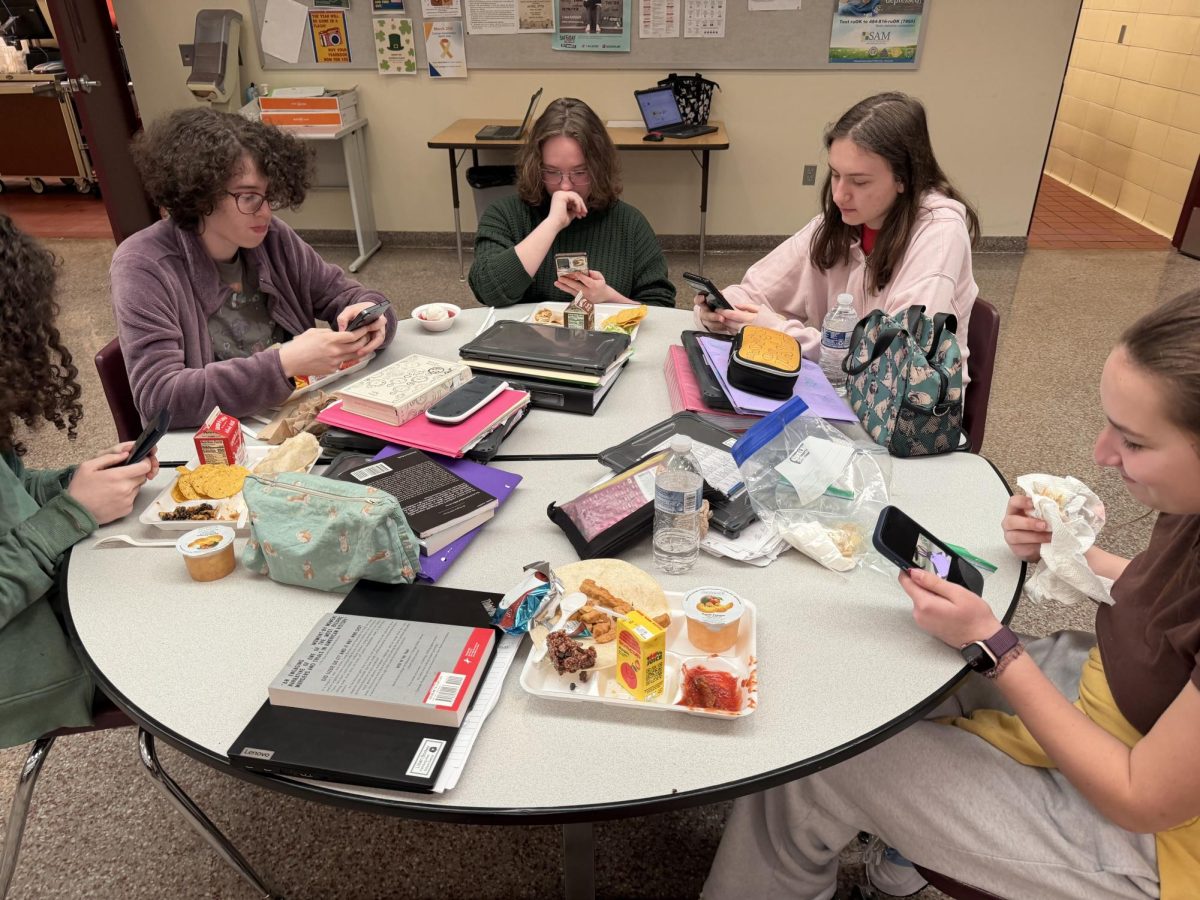
Ask any adult their opinion on the state of technology today and they will tell you it is too much, that kids nowadays do not understand the real world since they view it through a screen. However, there could be some truth to that.
“I hate texting,” says freshman Ava Lole, “ I can never remember if I replied to someone’s message or not, it gives me anxiety.” Ava’s not alone in this phenomenon as “texting anxiety” effects large population of teens all around the globe. Scientists point this to the fact that when two people interact face-to-face, their brains synchronize and pick up on physical cues like expressions and body language, but when texting, the lack of in-person dialogue can mislead the subjects to thinking the conversation is something it is not. This includes “Anger-Blindness,” the trait that lets people be more rude or angry to someone over text, which commonly leads to cyberbullying from no restraint, according to University of Wisconsin.
Children raised since 2020 have shown an influx in virtual experience, which includes using chat features and AI to communicate or talk. Although it is convenient to have universal reach to anyone in a pocket, the constant communication can put a strain on modern friendships. Researchers say that using AI for companionship derives from the human mess of friendship, creates something perfect and polished when real friendship is complex and difficult. Friendship feels monetized now, like it is just a ploy for companies to sell products or ads. Modern peers have simplified friendship down to a transaction between fellows instead of a bond that ties people together and creates empathy, humanity, security, and companionship. There are some things a cell phone cannot create, like the excitement of meeting friends after a long break or going out to hang together.
It is never too late in life to make friends; joining clubs or extracurriculars often leads to finding kindred spirits with similar interests as one’s own. As technology advances, it is easy to believe the headlines that children “can’t make friends” and society is doomed, but there is hope for the future generations to come. Using AI and texting as a tool, rather than an entire resource of information and relatability, society can continue to function as human-strong friendship machine. It all depends on us, the new generation, to decide how the future of friendship and communication will unfold.
For more information of technology’s impact on friendship, visit:
https://prsg.wiscweb.wisc.edu/leitel-technology/
https://pmc.ncbi.nlm.nih.gov/articles/PMC9169028/
https://dandeliontraininganddevelopment.com/2025/05/has-tech-made-our-friendships-too-intense/