
















Throughout lifetimes many seasons change and make us feel many different ways. Some enjoy hot summer days, laying next to the pool, rather than a cold icy night with a cup of hot chocolate. Seasons change just like emotions, and the most common time is during the winter.
Seasonal depression is a diagnosable type of depression that is linked to the seasons changing. Season typically begins in fall and throughout winter, because of the dramatic decrease in sunlight. Days become shorter and time begins to run out. Seasonal depression specifically linked to fall/winter has affected 5% of U.S. adults.
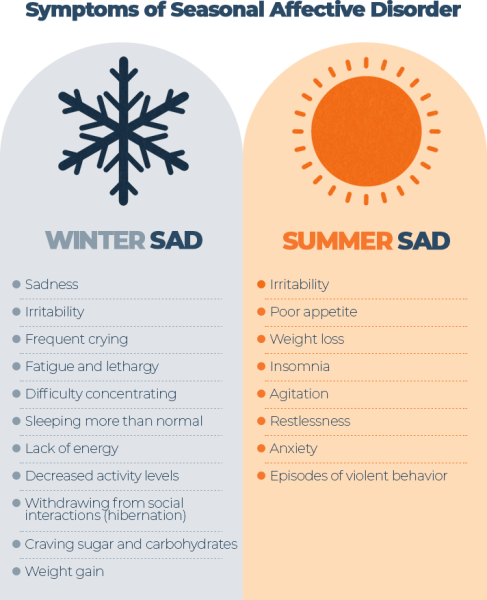
Seasonal affective disorders SAD involves symptoms of “winter blues”, over sleeping, low social battery, and impairment. Fellow Junior, Cali Tobias, says, “I feel so out of flow. Winter makes me tired and lazy because of the drastic change from summer.” So now what is the real science behind this internal imbalance.
Essentially this depression is linked to lack of sunlight. Therefore it causes a decrease in serotonin (mood regulator) and increases melatonin (sleep hormone).
Seasonal depression can be decreased and prevented: workout for at least 20 minutes a day/week, intake vitamin D to support the lack of sunlight, and of course therapy, talking is a great coping mechanism. Through simple treatment, some say they have a significant change.
If you or anyone is struggling with seasonal depression, do not be afraid to reach out to friends and family, or even additional resources. For more help call 988. For more information visit: https://www.mayoclinic.org/diseases-conditions/seasonal-affective-disorder/symptoms-causes/syc-20364651


