
















Transportation plays a major role in a student’s daily routine, and the way students travel to school can be very different depending on the country they live in. A comparison between Germany and the United States shows how culture, distance, and public system shape the everyday experience of getting to school.
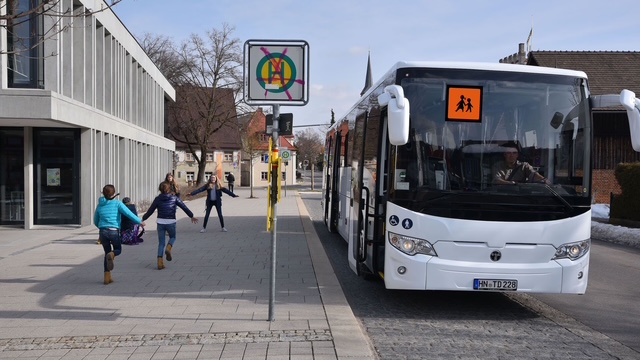
In Germany students rely heavily on public transportation. Many teenagers travel to school by bus, streetcar, or train, because these options are widely available even in smaller towns. It is normal for students to have a monthly bus or train pass, which allows them to travel not only to school but also around the city on weekends. In many regions, bus regions, buses run specifically at school times, and trains arrive with enough time for students to walk to their classrooms. Because so many students use public transportation, buses and trains are usually full of teenagers early in the morning.
Walking and biking are also common in Germany. Students who live close to their school often walk with friends or bike together, even in rainy weather. Bike lanes are well maintained, and many schools have large bike racks. Since fewer students are driven by parents, the area around German schools is usually less busy with cars in the morning.
In the United States transportation looks very different. At Hamburg, most students arrive by car or in a yellow school bus. School buses pick students up directly near their homes, which is helpful in areas where houses are far apart. Many older students drive themselves to school once they have their license, and large parking lots are a normal part of American school life.
Because walking and biking are less common, the roads around the school are often crowded during pick-up and drop-off times.
Public transportation is not something that most American students use for school. While buses and trains exist, they usually do not run at the right times or stop close enough to the school. As a result, students depend more on cars and school buses than on public systems.
These differences affect the daily rhythm of school life. In Germany, students often travel independently at a young age. They may spend time talking with friends on the train or stopping by a bakery on the way to school. In the U.S. the trip to school is shorter and more direct, especially for students who drive or ride a school bus. Weather also influences transportation differently: German students often walk or bike in rain or cold, while American students stay dry inside cars and buses.