














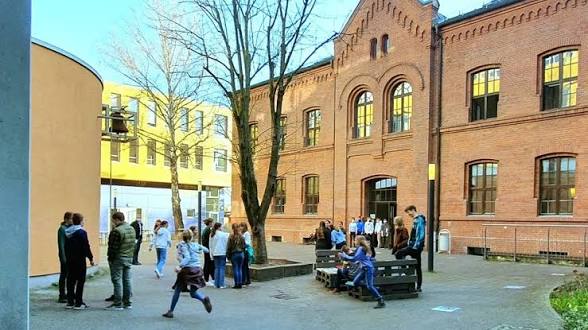
Everyday life for students can look very different depending on where they live. As a German exchange student at Hamburg Area High school, I quickly noticed how school routines and free time in the United States are not the same as in Germany. Both systems have their own rhythm and each creates a different kind of school experience.
In the United States, the school day usually starts around 7:30 a.m. and ends around 2:25 p.m.
After school, many students join sports teams, bands, or clubs, or they stay for other activities. American schools put a big focus on extracurricular life, and students often spend a lot of time at school even after classes end. Homework and studying usually happen later in the afternoon or evening.
In Germany, the schedule is different. Most schools start around 8:00 a.m., but the end time is sometimes around 1:00 p.m., and sometimes later. After school, students usually go home instead of staying for clubs or sports, which are often organized outside of school by local teams or community groups. This gives German students more free time in the afternoon to relax, meet friends, or do hobbies on their own.
Another difference is how weekends are spent. In Germany, many families enjoy quiet weekends at home or go for walks, bake, or visit grandparents. In the U.S., weekends can be more active, with football games, shopping trips, or family events. German students usually have more independence when it comes to traveling to school or spending time with friends, often using public transportation or bikes, while in the U.S., students rely more on cars or school buses.
Even though life looks different in both countries, students everywhere balance school, homework, and fun in their own ways. Experiencing both systems shows how culture shapes daily life- from when school starts to how afternoons are spent. Both have their own rhythm, but in the end, students share the same goal: to learn, grow, and enjoy their time inside and outside of school.